
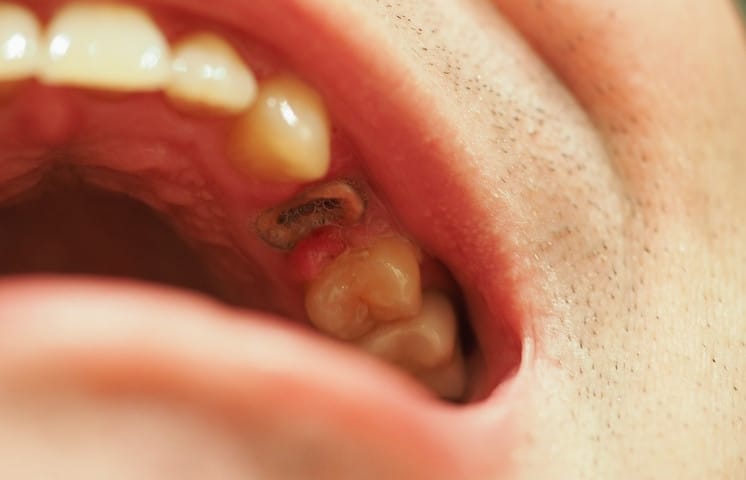
You can have a fractured tooth root due to trauma, decay, or as a result of some past dental procedure. If you see a part of the tooth root that was once visible is now missing, do not ignore the sign. It might lead to further complications if left untreated.
Having a basic understanding of the dangers of a broken tooth root is important for your overall dental health. In this blog, you will get more information on this.
What Can be the Immediate Consequences of a Broken Tooth Root?
When a tooth root breaks and you leave it in the gum, your body responds almost immediately. Some of the initial signs to be aware of are:
- Pain and Discomfort: Pain is initially mild but can increase over time, particularly when you chew or consume hot and cold liquids.
- Swelling and Redness of Gum: The gums surrounding the area of the broken tooth root can become red, indicating that the area is infected or irritated.
- Increased Sensitivity: When your tooth nerves are exposed, even inhaling cold air or drinking hot fluids can lead to stinging pain.
- Irritation of Tissue: When pieces of the fractured root remain in your mouth, they irritate the soft tissues. This can lead to soreness or even cuts within your mouth.
Long-Term Consequences of an Untreated Broken Tooth Root
Having a broken tooth root in your mouth for an extended period can cause several serious complications. For unbearable pain, visit a nearby emergency dental care.
But what can be the complications you may ask:
- Development of Infection and Abscess: Leaving the broken tooth root untreated means giving bacteria chance to enter the open root. This can cause abscess – a sore, pus-filled infection. This abscess can quickly spread to your jawbone and other areas.
- Gum and Bone Loss: In the long term, the tissue surrounding your jawbone and gums can deteriorate as a result of the continuing infection, risking tooth loss.
- Chronic Discomfort and Pain: Initial periods of occasional pain can progress into continuous pain that interferes with eating and talking normally.
- Affect on Supporting Teeth: The bacteria from the fractured root are transferred to the adjacent teeth. Here, they cause greater risks of infections and cavities.
- Risk to General Health: If you think oral infections affect only your mouth, then you are wrong. When you leave the tooth root unattended, bacteria spread to your bloodstream. This can potentially lead toheart disease and other systemic illnesses.
- Spread of Infection: In extreme cases, the infection can spread beyond the gums, causing swelling in the face, sinus issues, or even the need for hospitalization.
- Increased Treatment Complexity: The longer a broken tooth root goes untreated, the more complex the treatment becomes. What might have been a straightforward extraction can become a surgical procedure with bone grafting or gum repair.
What Are the Treatment Options for a Broken Tooth Root?
Treating a broken tooth root on time is essential for your overall oral health. Here, you have multiple treatment options. Consult with a professional for better guidance.
- Extraction: When preserving the tooth root is not possible, a dentist performs surgical extraction to remove the remaining part of the tooth root to avoid any further complications.
- Root Canal Therapy: If your tooth can be saved, a dentist will go for root canal therapy. Here, the fractured tissue is excised and the tooth is sealed to keep any chnaces of infection at bay.
Neglecting a broken tooth root means summoning dental infections and complications. The consequences of this negligence go beyond your mouth. So, understand the signs of complications and do not ignore a broken tooth root ever. If you face any such situation, consult with your dentist for an early assessment.