
Simple Protection with Big Benefits
Dental sealants can reduce the risk of decay in molars by up to 80%, making them one of the most effective ways to protect your child’s teeth. Despite their proven benefits, only 43% of children aged 6 to 11 have sealants, according to a 2016 report from the Centers for Disease Control and Prevention (CDC). The CDC also highlights that children without sealants are nearly three times more likely to develop cavities than those who have them.
How Do Sealants Work?
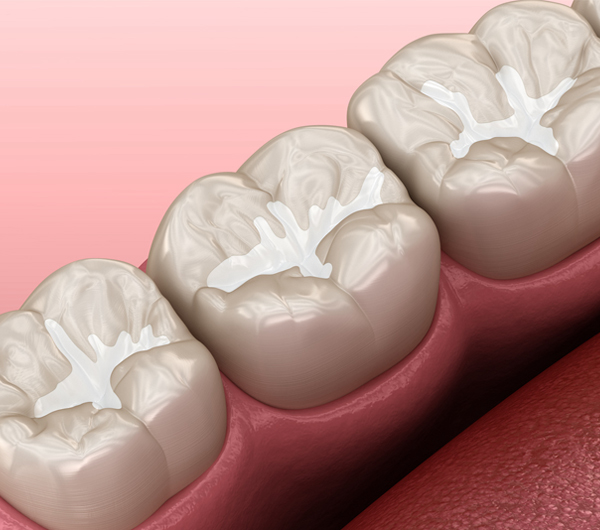
Think of sealants like raincoats for your teeth. The grooves and pits in your molars are prime spots for food and bacteria to hide, which can lead to acid buildup and, eventually, cavities. When sealants are applied, they form a thin, protective layer over the chewing surfaces of your teeth. This barrier helps keep food and bacteria out, shielding your teeth from harmful acids—just like a raincoat protects you from the rain and mud. It’s a simple, painless way to prevent decay before it starts.
Who Can Get Sealants?
Both kids and adults can benefit from dental sealants, but applying them early offers the greatest protection. The first set of molars usually comes in around age 6, with the second set appearing around age 12. Sealing these teeth as soon as they erupt helps prevent cavities before they have a chance to start saving your family time, money, and future dental work. Wondering if sealants are right for your family? We’re happy to help guide you.
How Are Sealants Applied?
The sealant procedure is quick, easy, and completely painless. First, we clean and dry the tooth, then apply a gentle acidic gel to its surface. This gel lightly roughens the area, helping the sealant bond more securely. After a few moments, the gel is rinsed off and the tooth is dried again. Then, the sealant is carefully placed into the grooves of the tooth, and a special blue light is used to harden it locking it in place for long-lasting protection.
Can Sealants Be Placed Over Cavities?
Sealants can be applied over areas showing early signs of decay to halt further damage to your tooth. Since certain sealants are transparent, your dentist can monitor the tooth's condition to ensure the sealant is effectively fulfilling its role.